Agribusiness and manufacturing industry
  Farming and valorisation of organic product
  Sanitation and waste treatment
  Transport and storage
Industrial hoppers: the ultimate guide.
Key points to remember:
In summary: industrial hoppers play a vital role in managing the logistics flow of bulk materials. They handle the reception, temporary storage and controlled discharge of solid products.
There are several models available depending on the application:
- The surge hopper for filling containers such as big bags.
- The feed hopper and dosing hopper for channelling products and then controlling their delivery to a facility.
- The receiving hopper for quickly receiving large quantities of goods arriving by lorry and skip.
- The truck unloader for quickly unloading and transferring bulk materials to other equipment.
The guide presents the main types of industrial hoppers, their specific features and their applications.
What is an industrial hopper, and what is its function?
An industrial hopper is an equipment designed to receive, temporary stockpile and then give back bulk solid materials.
Its inverted pyramid shape facilitates the flow of materials by gravity.
In its simplest form, it functions like a funnel.
Some more complex models of industrial hoppers incorporate mechanical systems, such as a conveyor belt, vibrator or screw, for precise control of the output flow.
The industrial hopper is a key link in the logistics chain, ensuring a constant and controlled supply to downstream facilities.
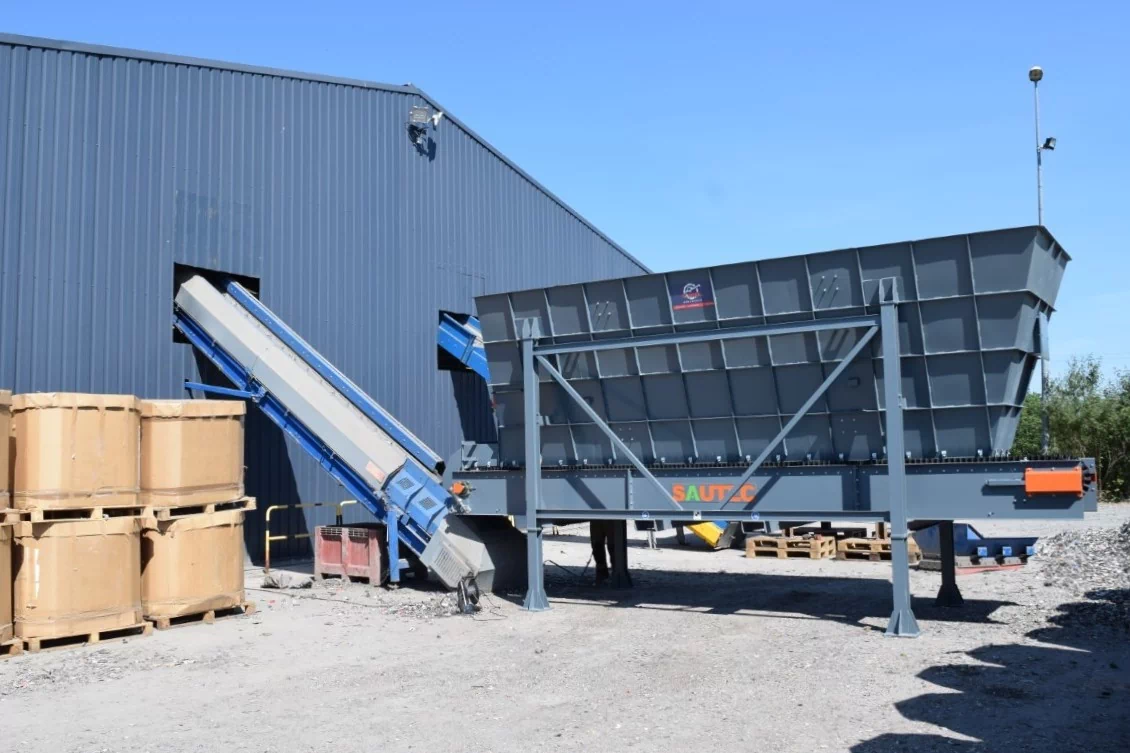
The different types of industrial hoppers.
Surge hopper: simple and effective.
The surge hopper is used to facilitate the loading of containers, such as big bags.
Its robust tubular steel structure gives it great stability and durability.
The surge hopper is loaded from the top of the hopper using a bucket. The inclined sides of the hopper play the role of a funnel and naturally guide the product to its base for clean and centred filling of big bags.
The product exits through a chute or hatch, depending on the nature, particle size and density of the product.
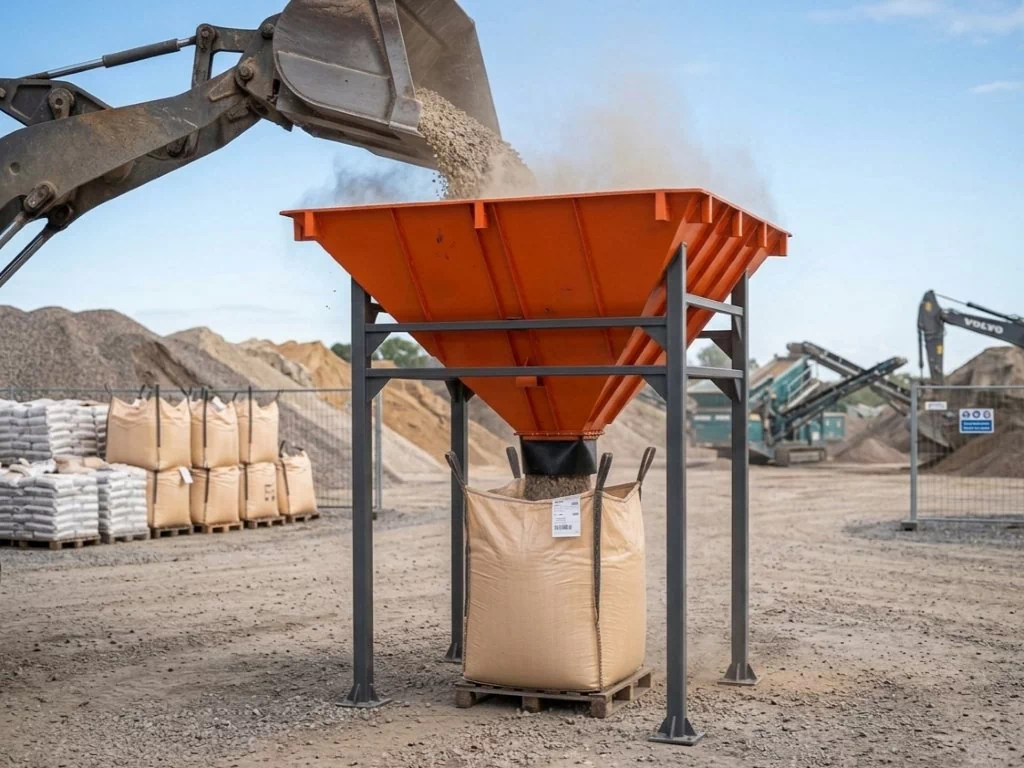
Some models of surge hopper have height-adjustable feet to accommodate all sizes of big bags. The capacity of the hopper depends on the model and your requirements.
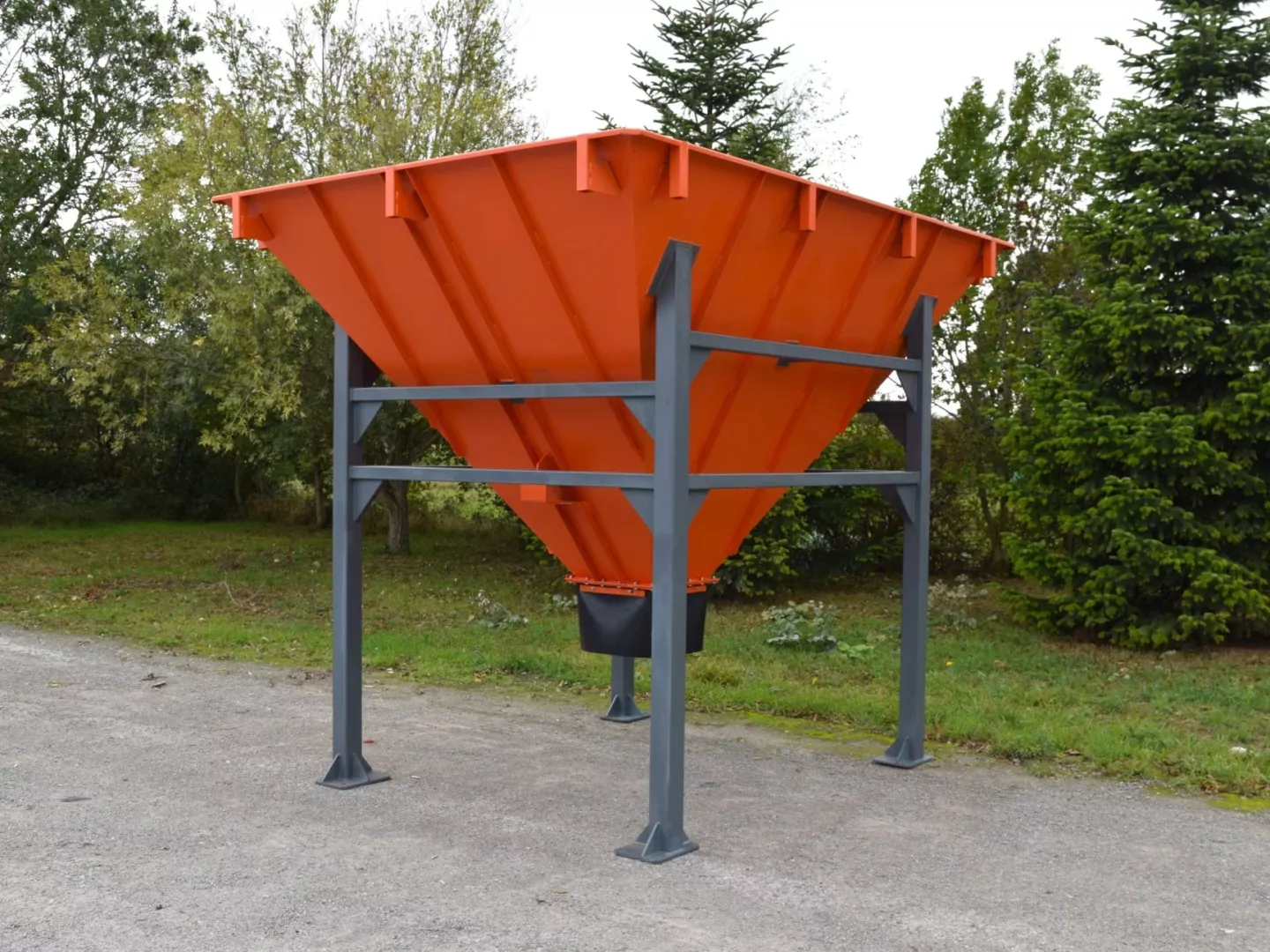
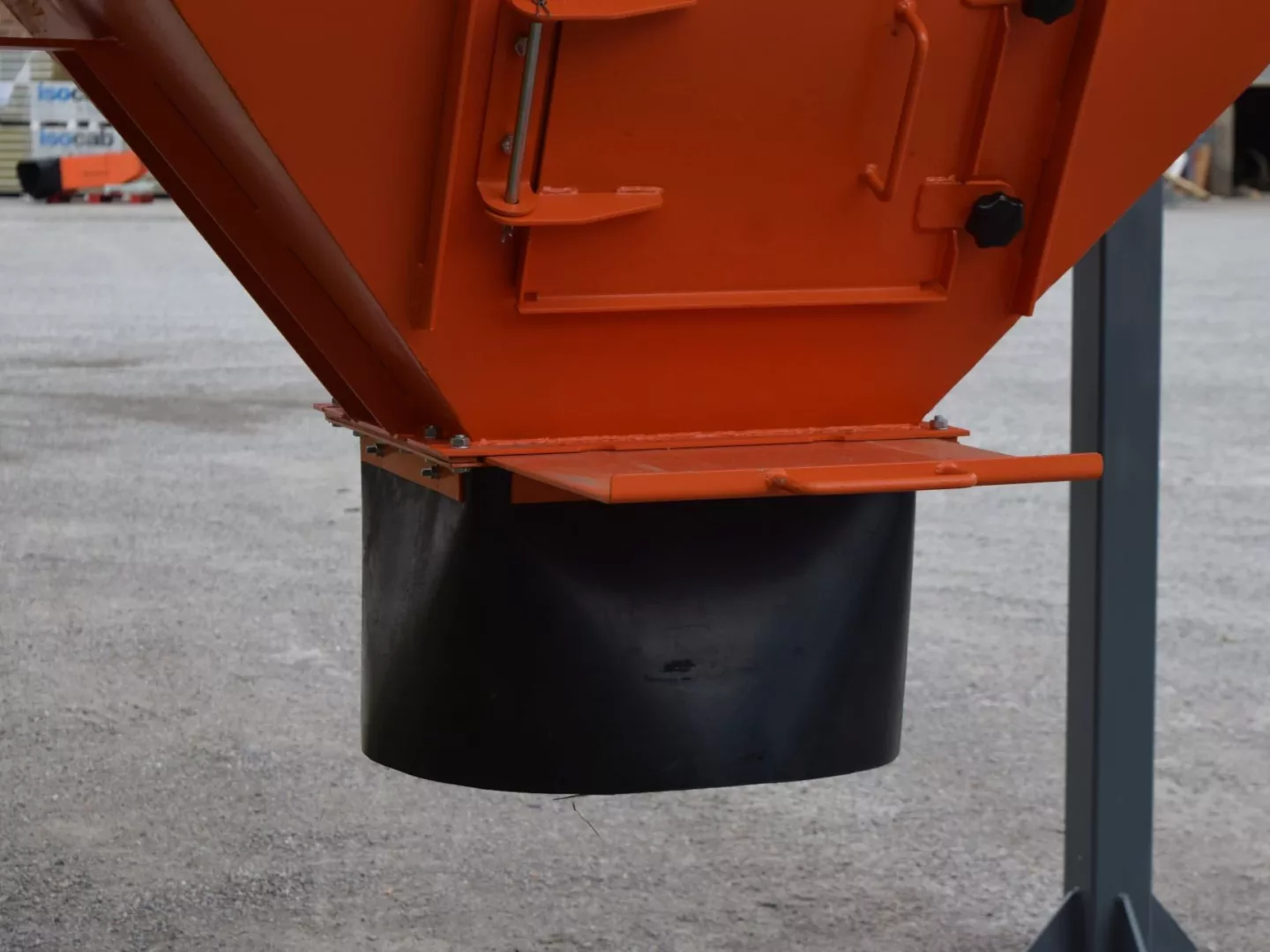
This solution is used in many sectors, such as industry and agribusiness.
Feed hopper and dosing hopper: perfect flow control and management.
In industrial applications, the feed hopper refers to two types of equipment:
A hopper whose function is to channel a large quantity of products to feed a downstream installation such as a conveyor belt.
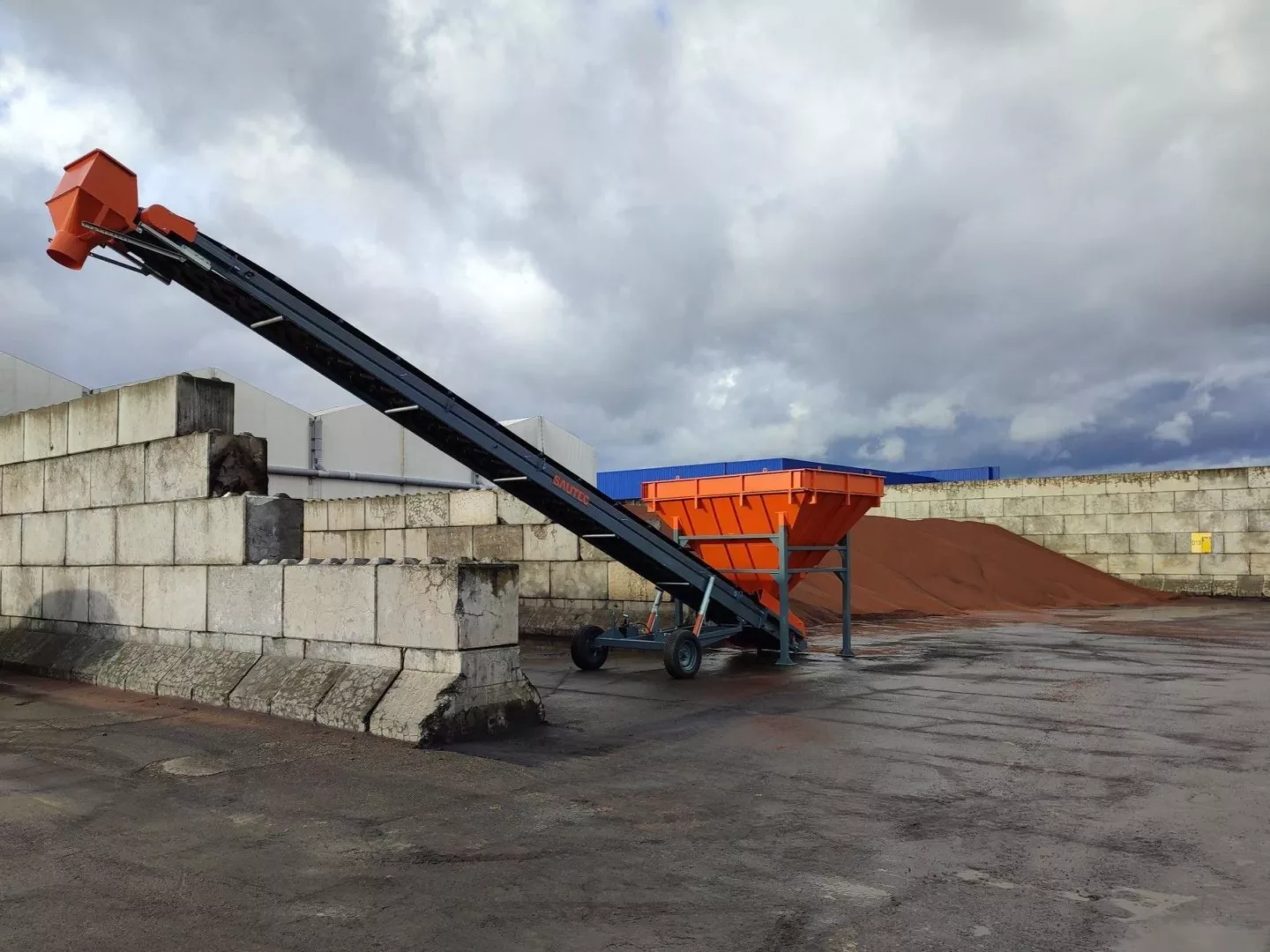
A customised feeding system capable of delivering a continuous, controlled flow of materials to a sorting line or processing operation.
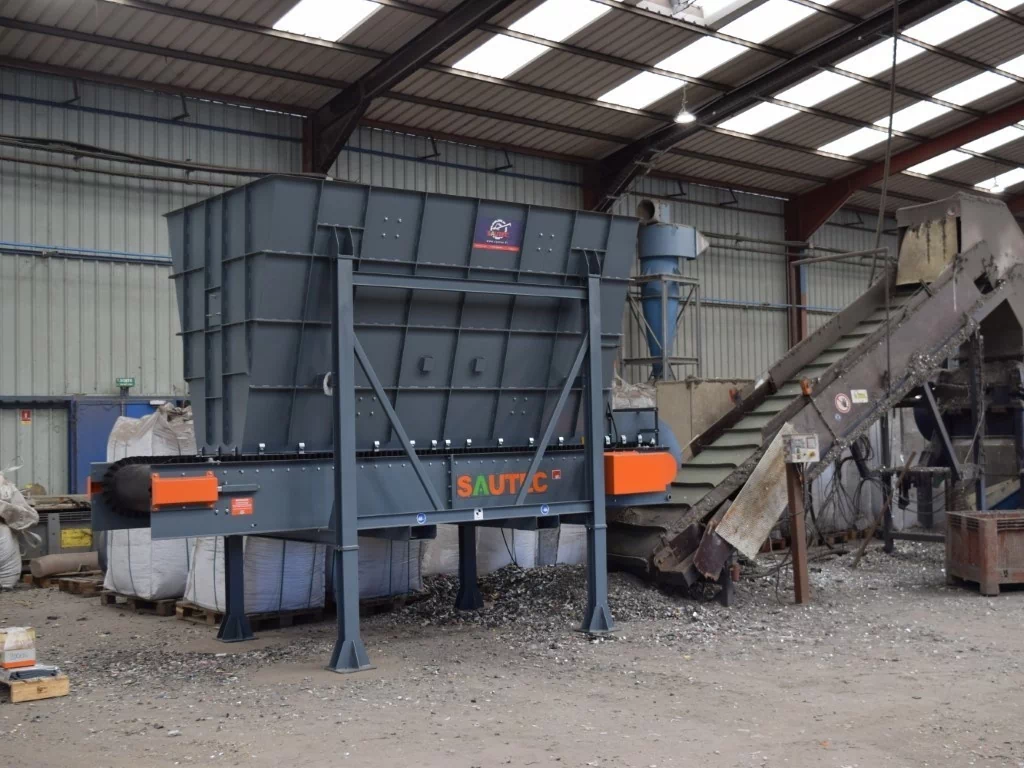
Made of steel, the inverted pyramid shape of feed hopper simplifies loading and provides effective buffer storage. To ensure efficient product delivery at a constant flow rate, an extractor conveyor is installed at its base. This is known as a dosing hopper.
Adjusting the speed of the conveyor, combined with a height-adjustable outlet door, allows for precise and regular product delivery. A load recovery dome, installed inside the hopper, reduces the pressure exerted by the column of materials.
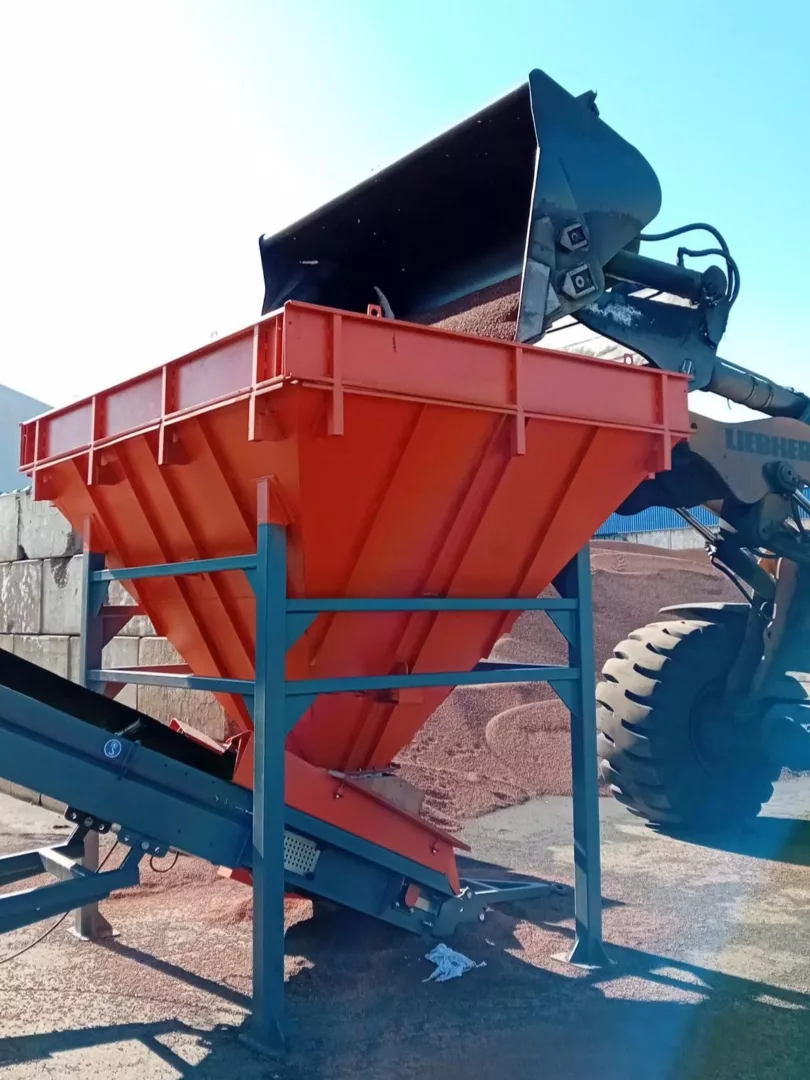
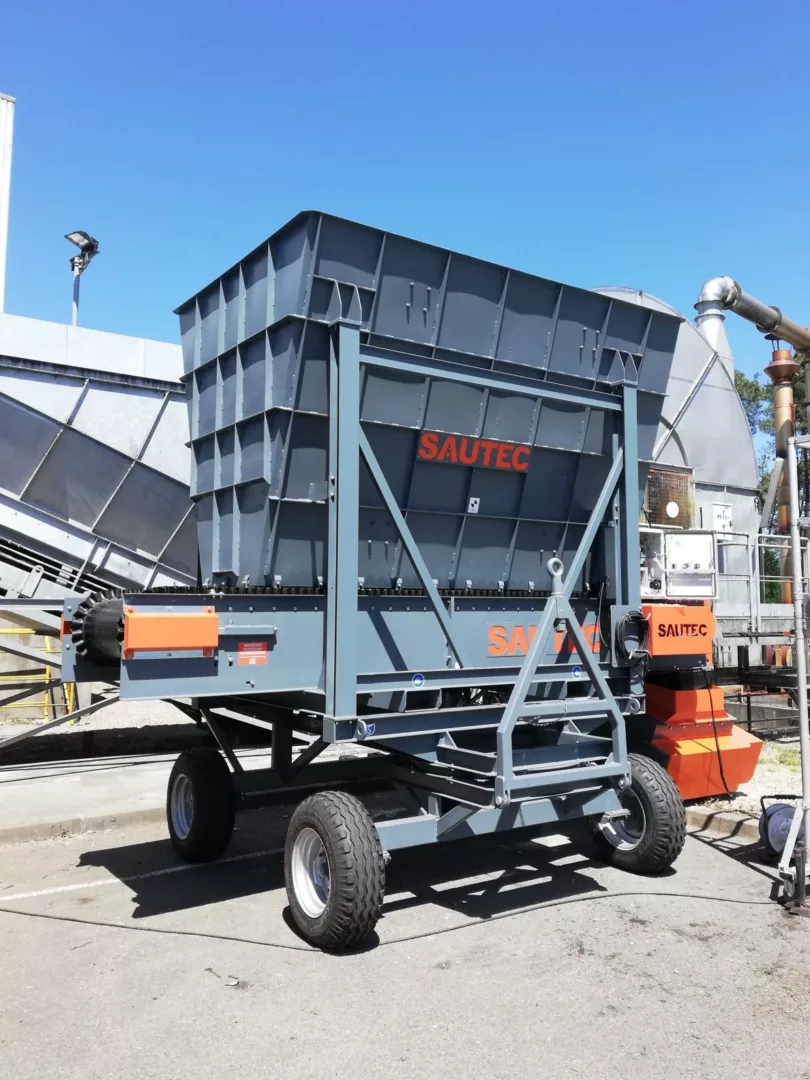
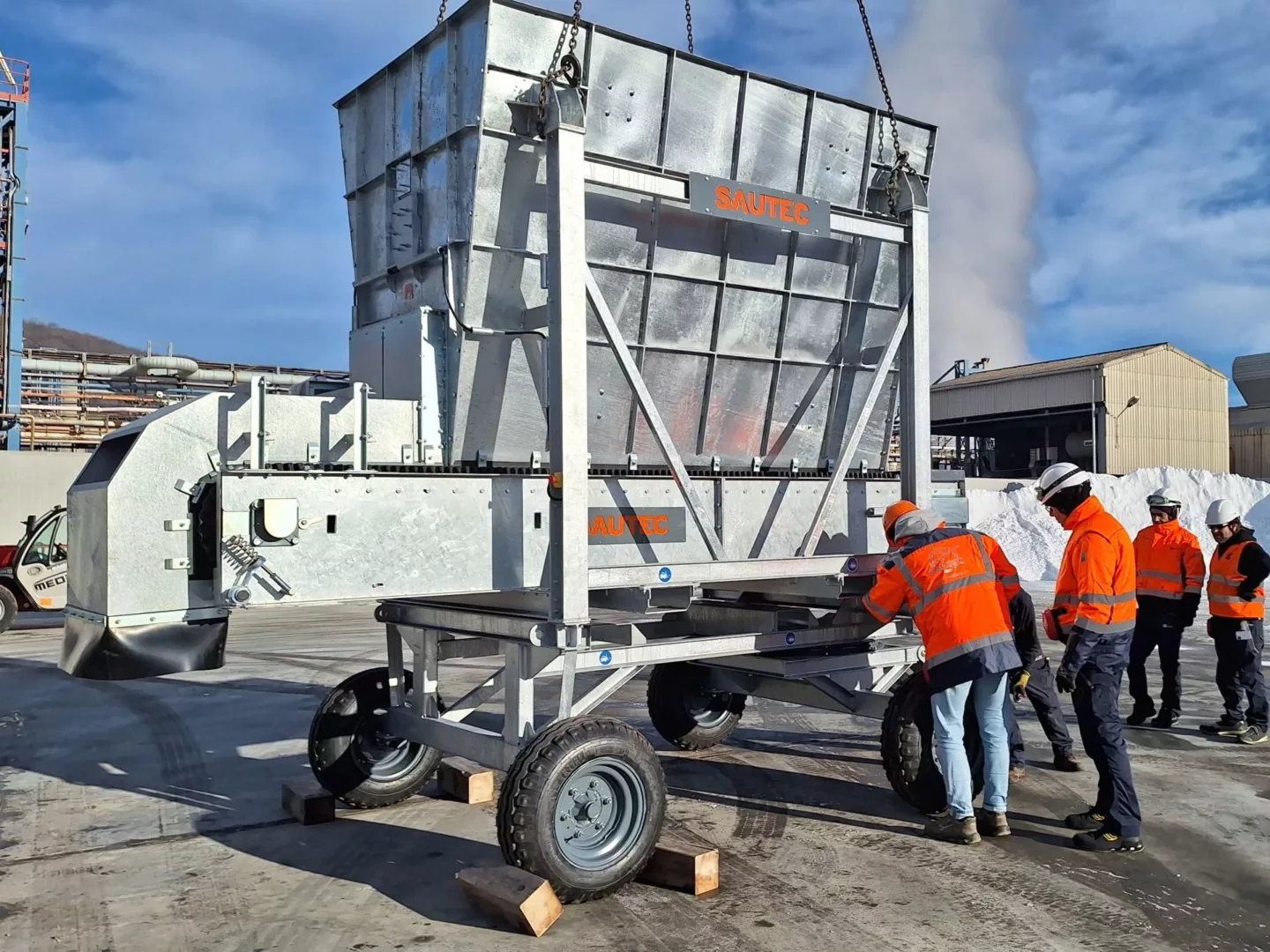
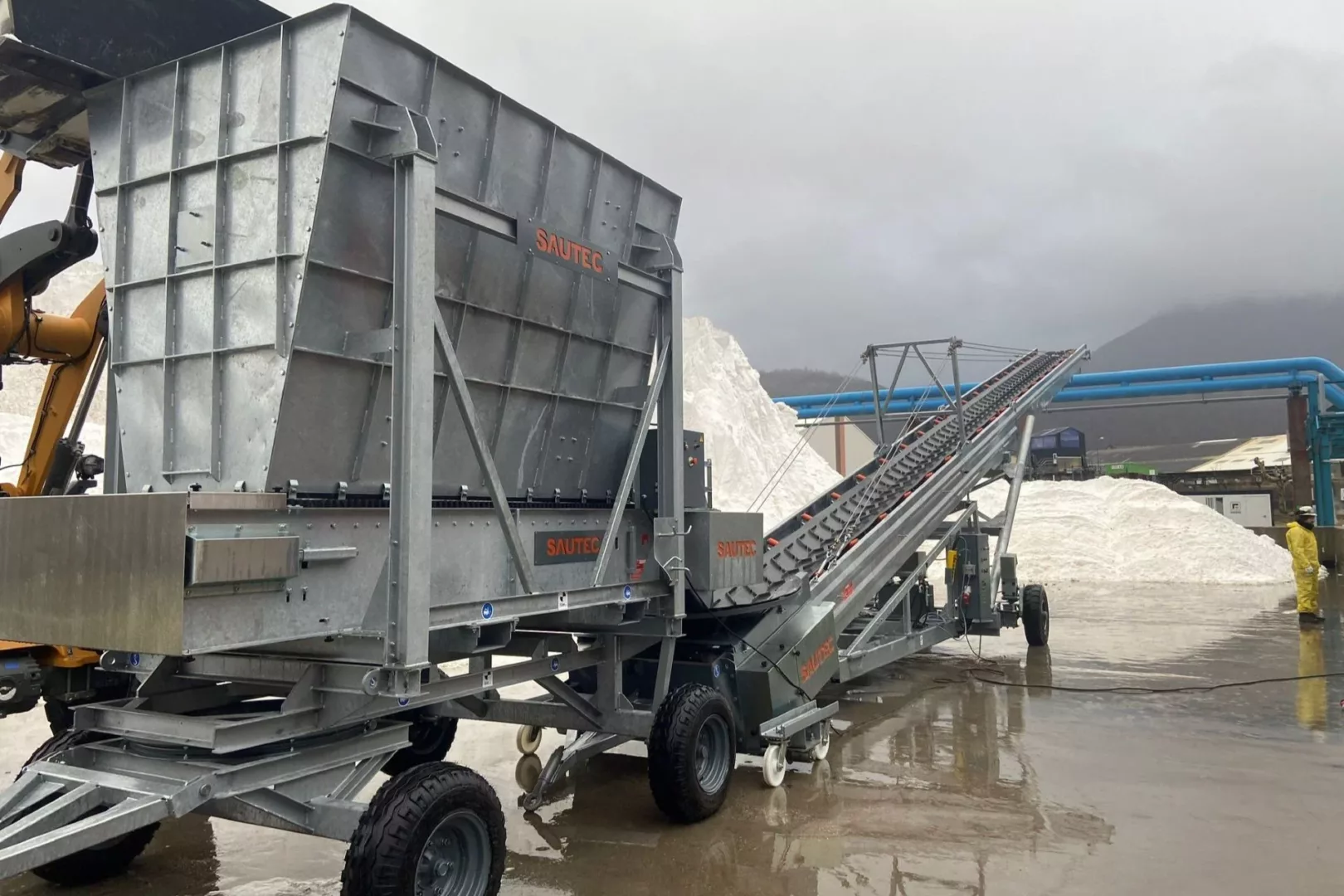
Dosing hoppers are custom-made technical solutions, sized according to your needs and the technical characteristics of the products you wish to handle. They can be fixed or mobile and adapt to various industrial contexts.
This is the case for some of the feed hopper we have manufactured for companies in the waste industry.
Receiving hopper: safety and logistical performance.
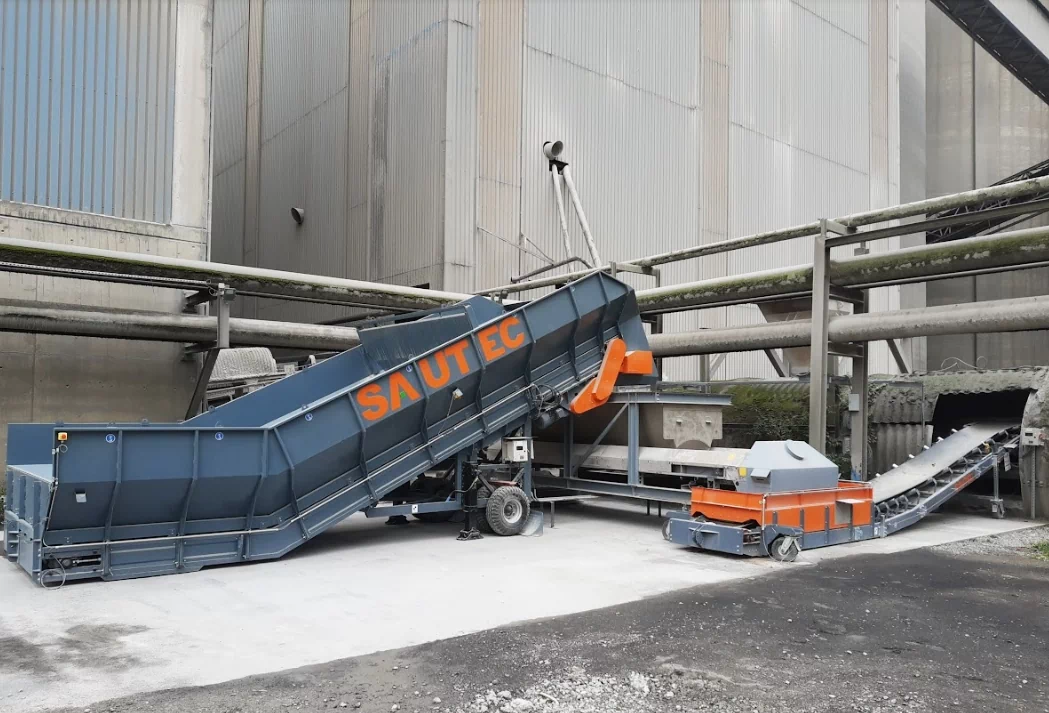
The receiving hopper is a key piece of equipment in the logistics chain, as it facilitates the rapid unloading of lorries and skips. It is the entry point for receiving large quantities of products and ensuring their transfer to other equipment.
This solution addresses the following logistical challenges:
- Reducing truck waiting times and increasing vehicle turnover.
- Limiting repetitive handling (picking up piles).
- Making all logistical operations more reliable.
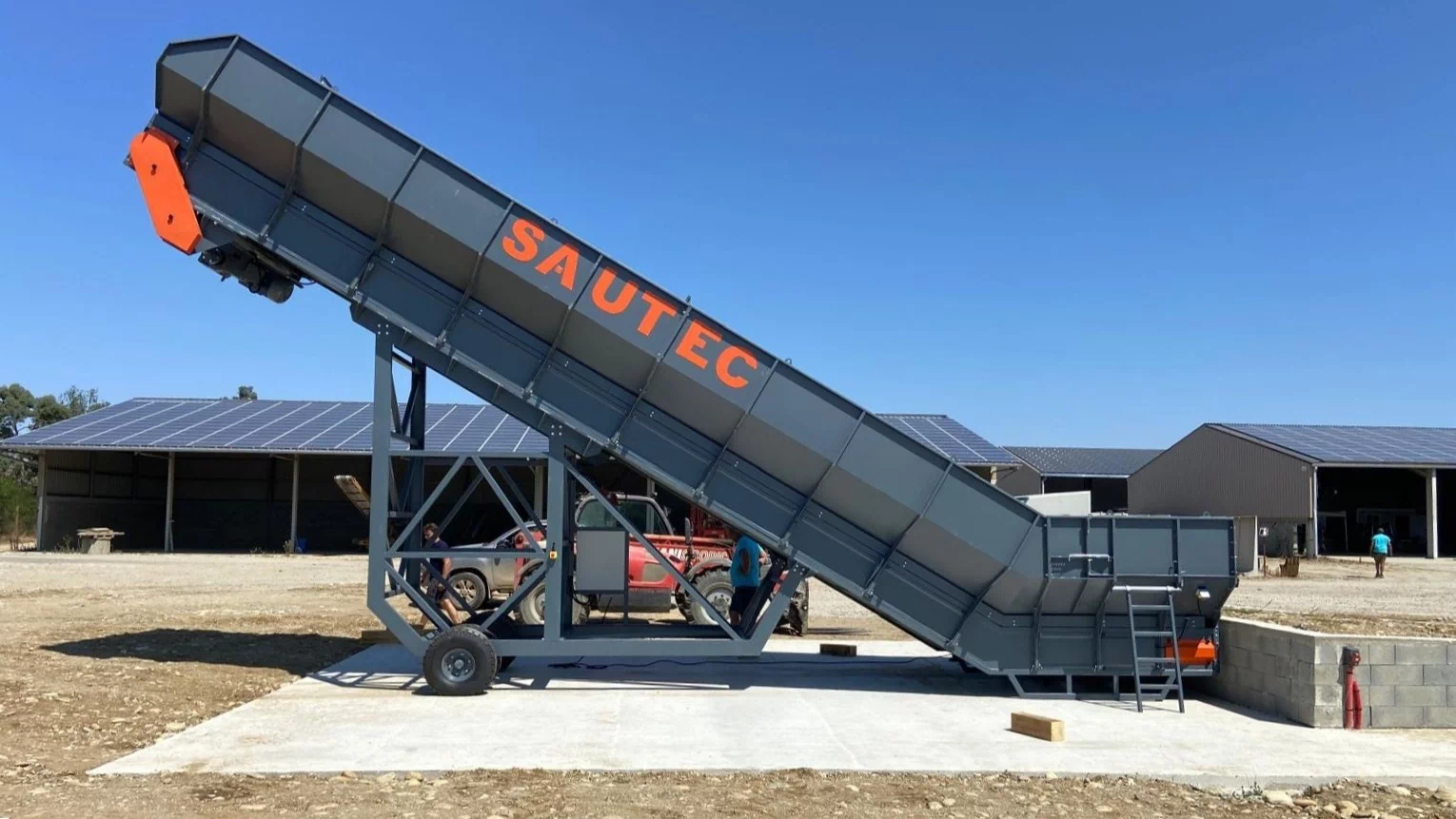
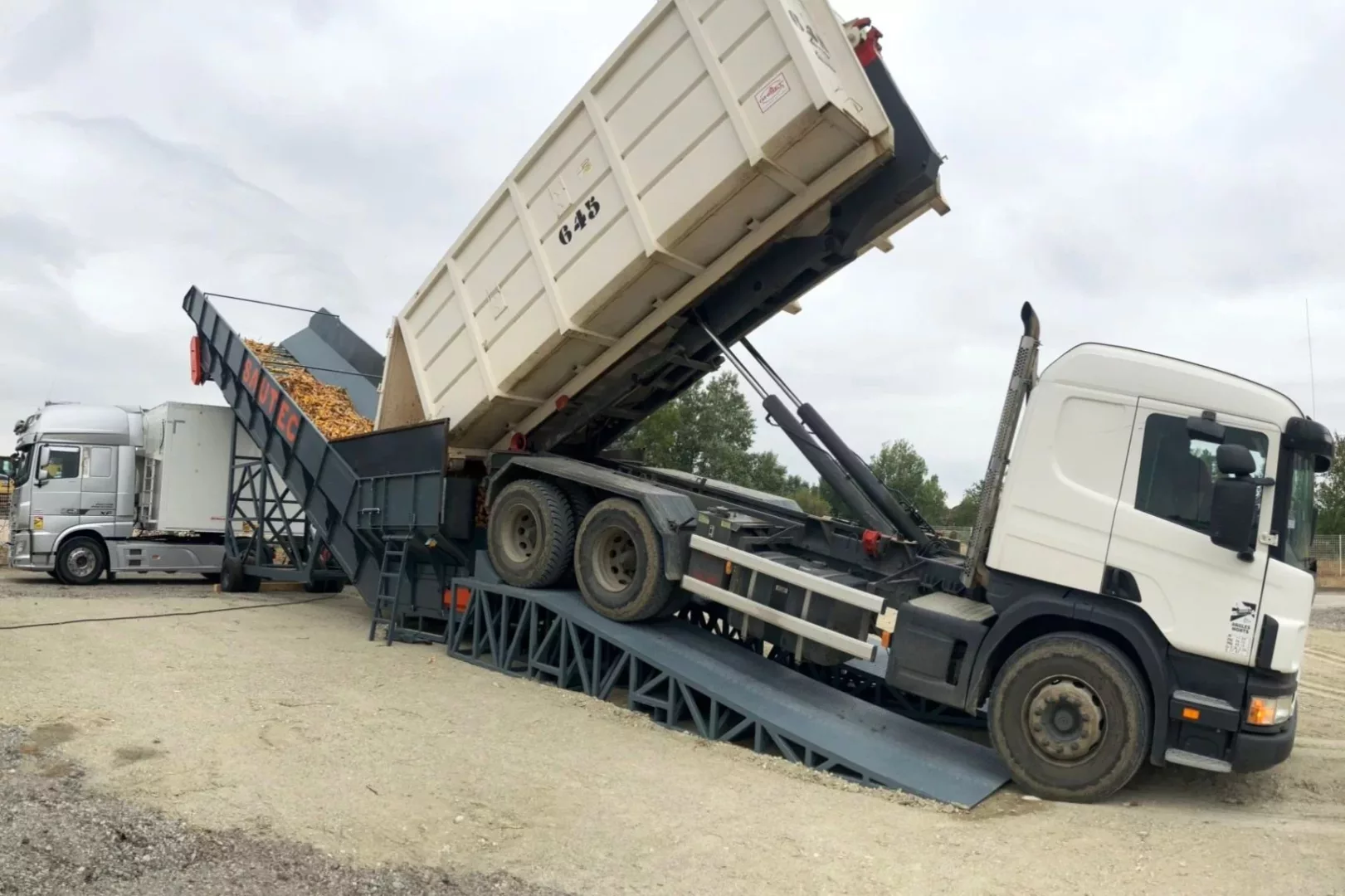
In the agricultural sector, the receiving hopper s useful for receiving cereals, corn or potatoes. The hopper is designed to allow unloading with the rear doors open while preserving the quality of the crops. It can then be used to feed a sorting line, an elevator belt or for transhipment between agricultural tippers and semi-trailers.
In the agro-industrial or port sector, the receiving hopper s used for storage, ship loading or to feed an industrial process.
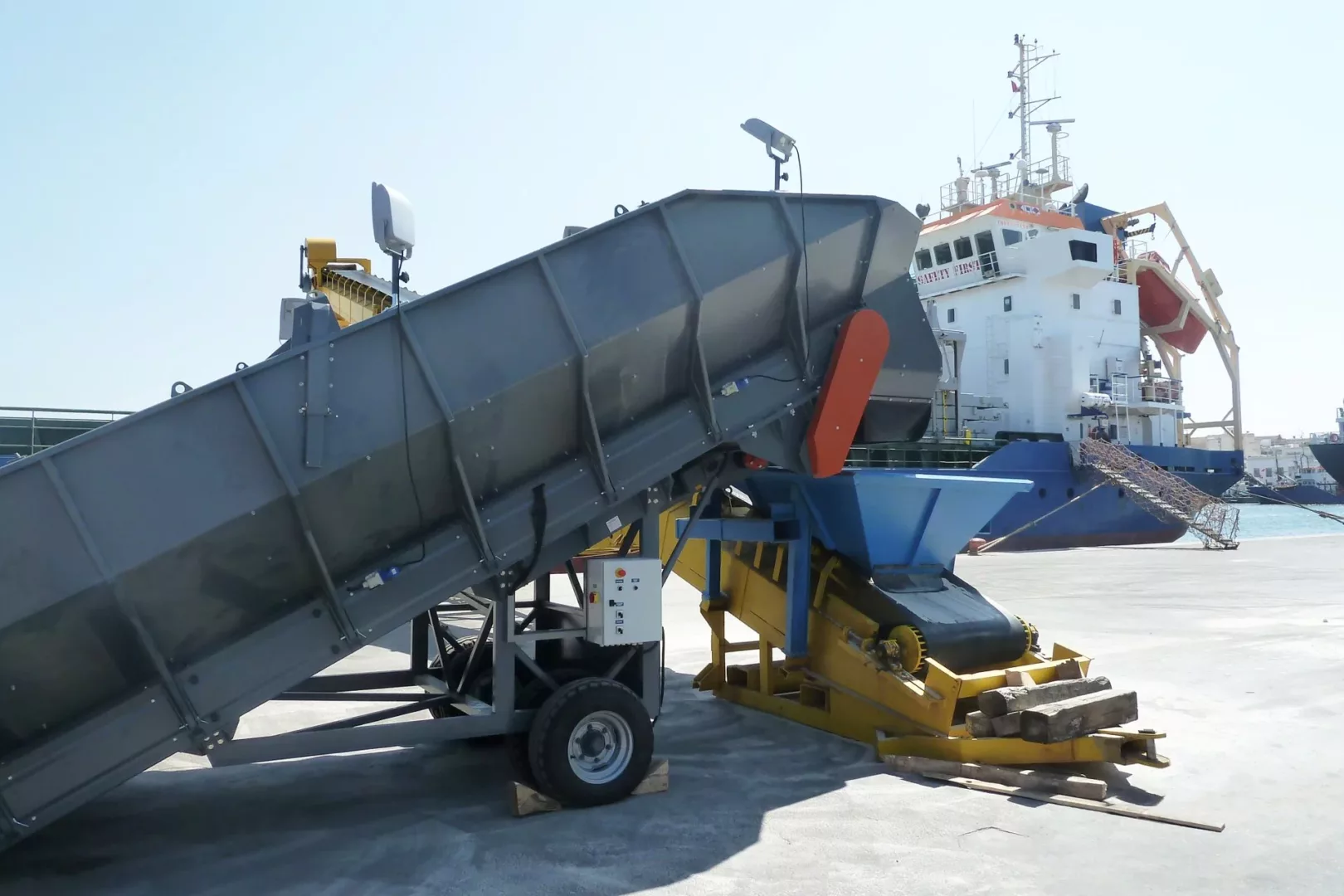
Made from robust materials, it can withstand intensive use and can be easily integrated into an existing environment without the need for civil engineering. On demand, our receiving hoppers are mounted on wheels for greater flexibility.
Truck unloaders: flexibility and rapid implementation.
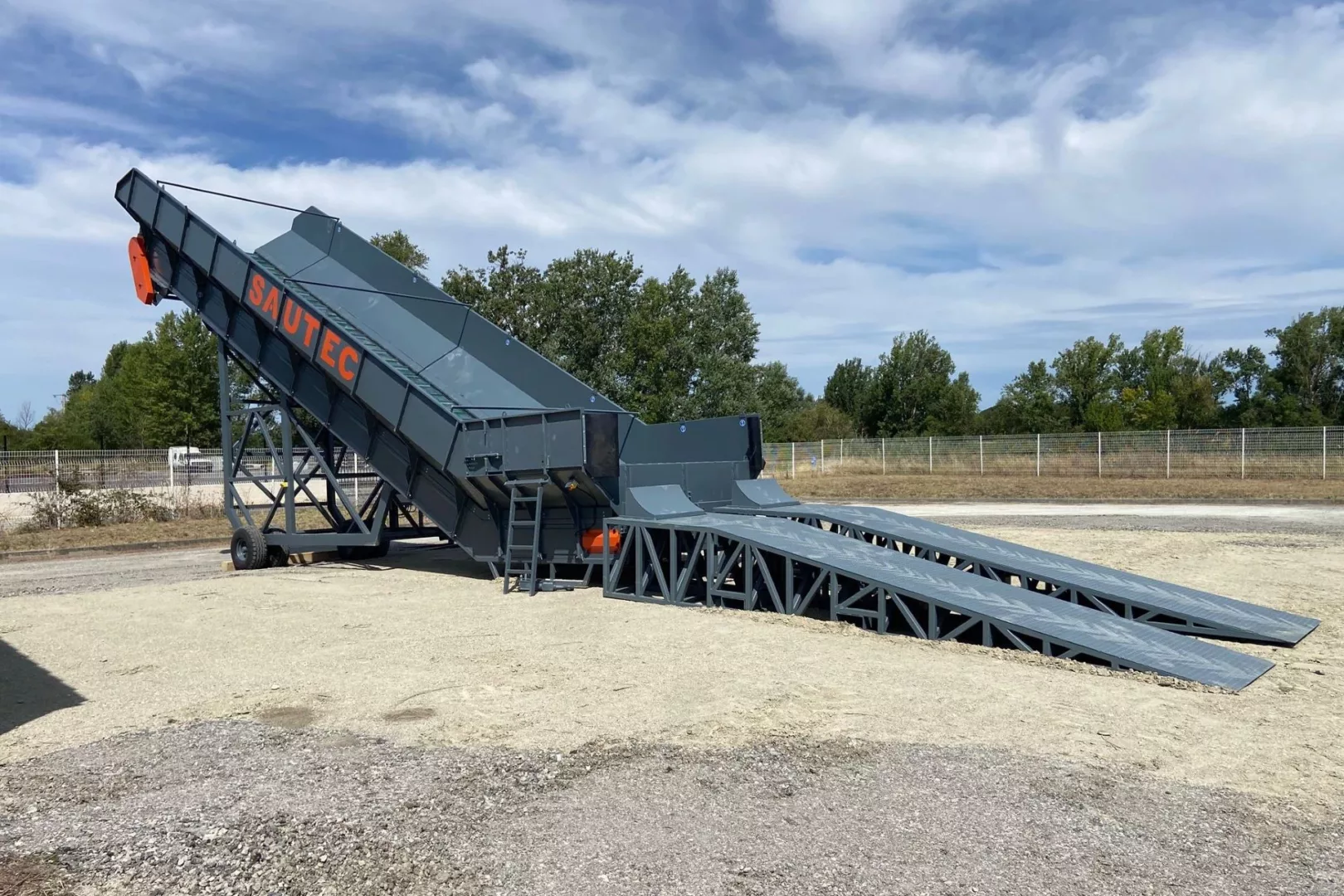
The little sister of the receiving hopper, the truck unloader is the fastest and easiest receiving solution to set up.
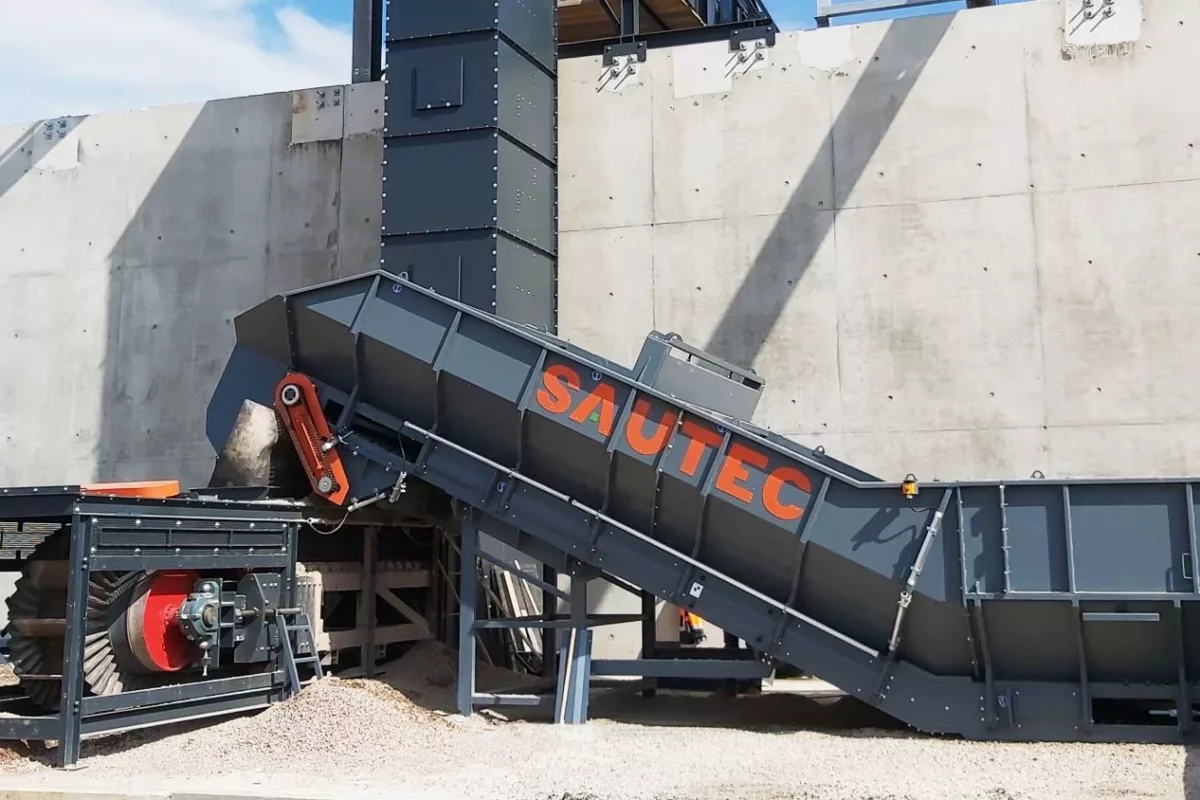
The truck unloader is a mobile flat hopper with a belt conveyor designed for rapid unloading of lorries. Its purpose is to receive bulk products from the rear hatches and transfer them immediately to another facility.
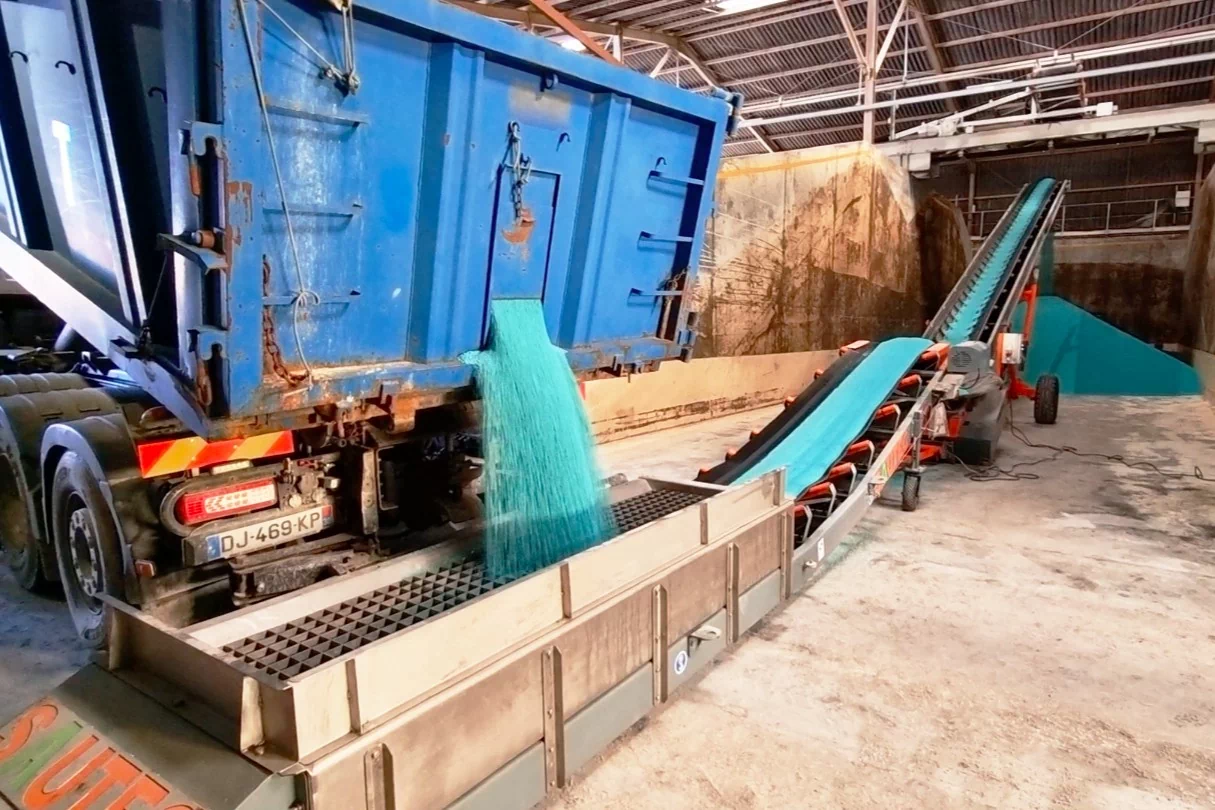
Unlike other hoppers, it does not allow for ‘buffer’ storage of bulk products but promotes smooth operations. Able to empty 30 tonnes of bulk products in less than 10 minutes, it is a flexible alternative to grain receiving pits. Its large unloading hopper simplifies truck alignment manoeuvres and improves optional efficiency on site.
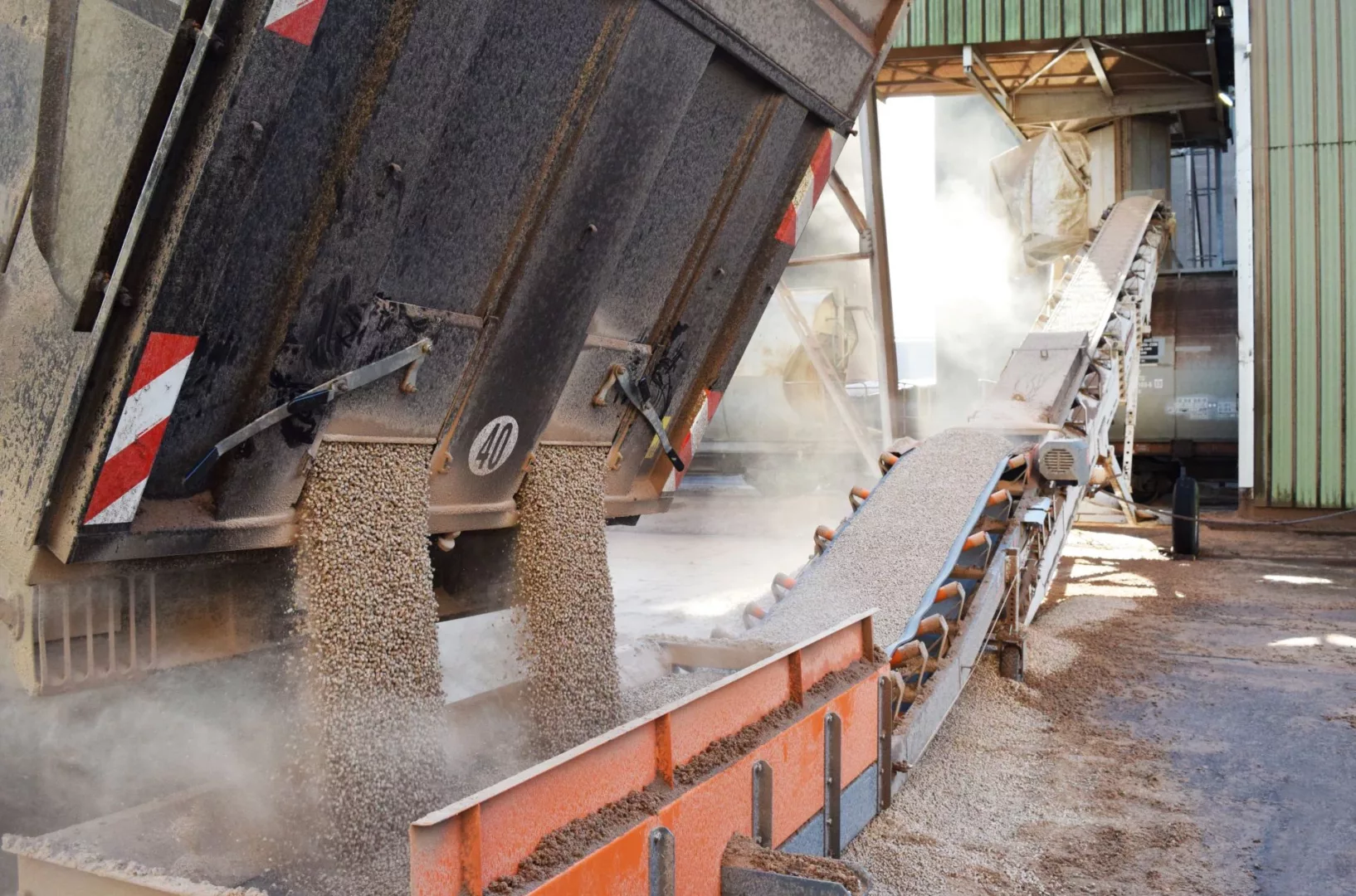
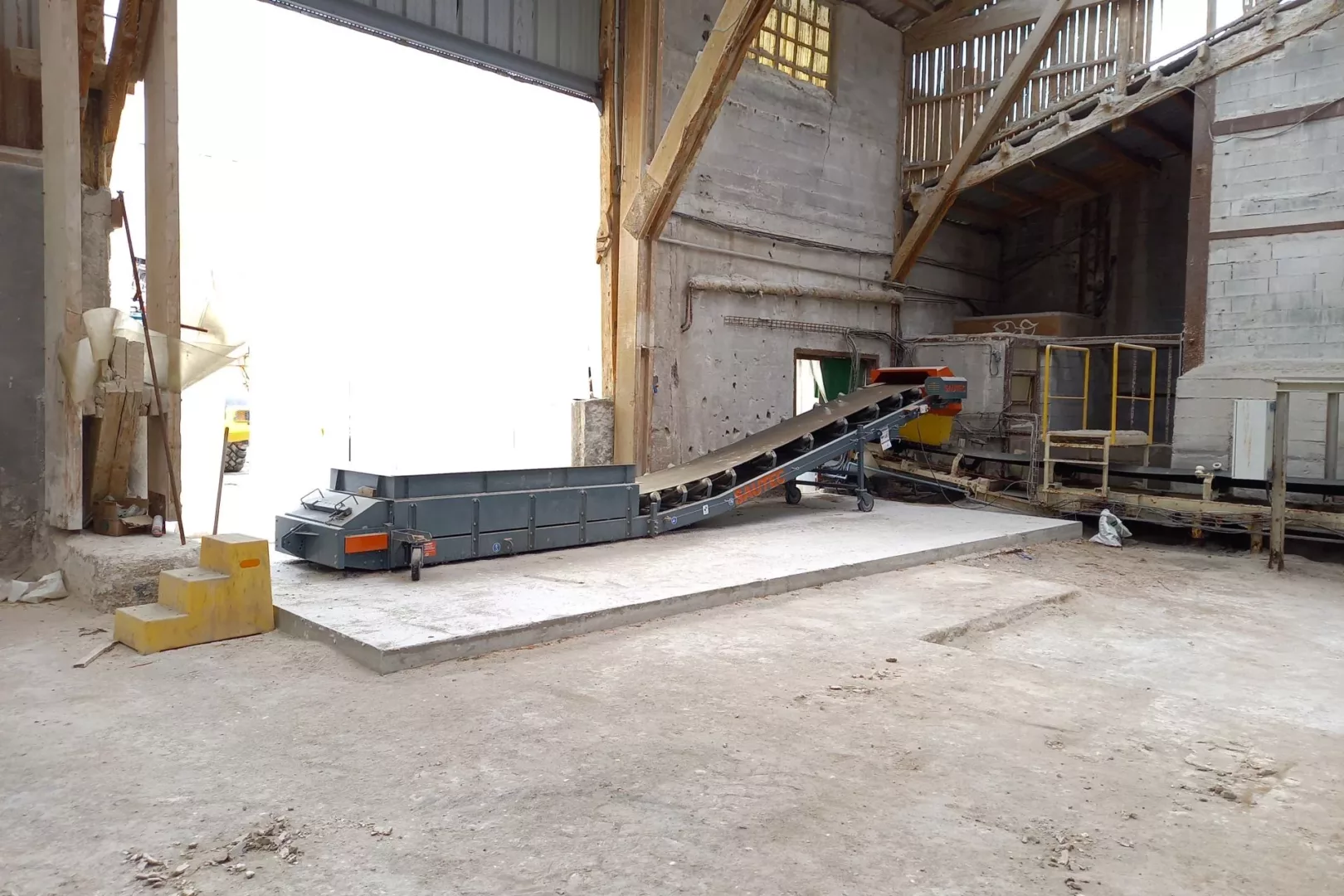
Mobile and easy to move, the truck unloader adapts to all types of environments and industrial uses.
Summary table of the main types of hoppers.
| Hopper type | Main function | Common applications |
| Surge hopper | Filling containers such as big bags. | Filling big bags. |
| Feed hopper | Feeding an installation like a conveyor belt. | Feeding a belt conveyor. |
| Dosing hopper | Feed a system with a continuous and controlled flow rate. | Feed a belt conveyor, a waste sorting line or an industrial process. |
| Receiving hopper | Unload lorries quickly and safely. | Feeding a belt conveyor, a crop sorting and cleaning line, carrying out transhipment operations, feeding an industrial process. |
| Truck unloader | Transfer products without storage. | Feeding a conveyor belt or loading a barge. |
Applications of industrial hoppers.
Which industrial hopper should I use for my sector?
The choice of the hopper depends on the product being handled and the operating mode.
Agricultural sector

The receiving hopper facilitates rapid unloading of lorries and skips while preserving crop quality. The truck unloader, meanwhile, allows grain to be efficiently transferred to an elevator belt for stacking.
Industry and agro-industry
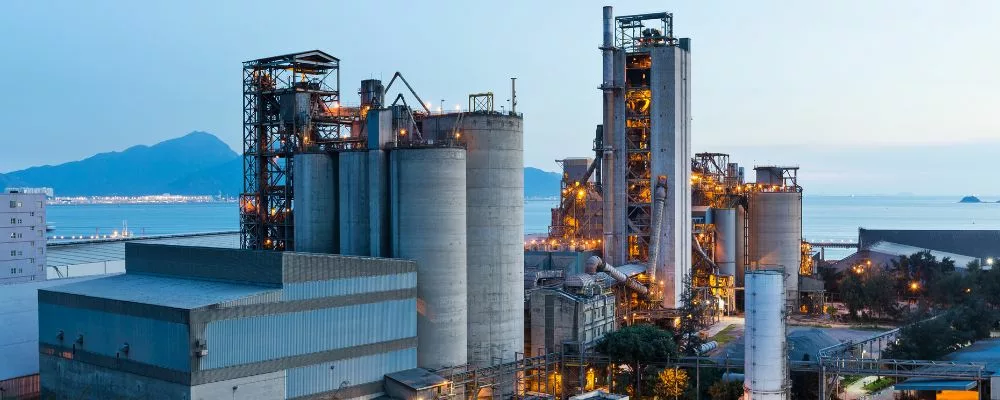
The surge hopper is perfect for cleanly filling products into big bags. To feed a production line or process evenly, the feed hopper or the dosing hopper is preferred, as they guarantee a continuous and controlled flow.
Logistics and port sector

The receiving hopper and the truck unloader are used to quickly unload lorries or feed a skip during storage, transhipment or ship loading operations.
Waste management
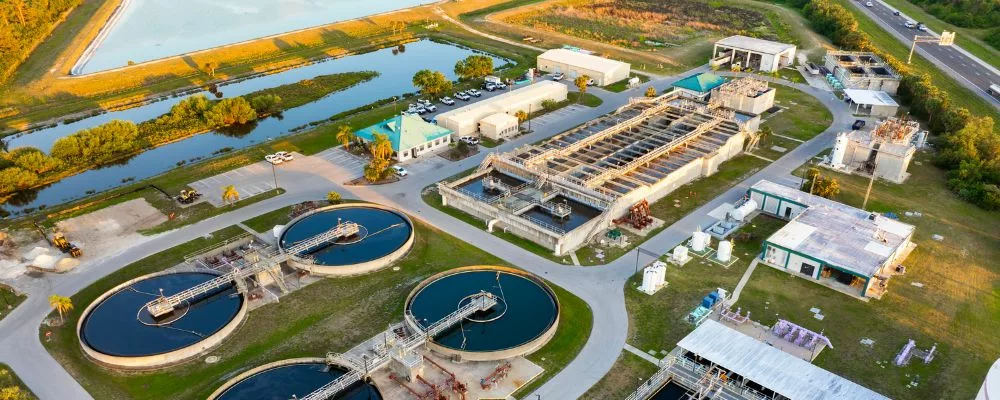
The feed hopper and the dosing hopper ensure constant and precise distribution of materials in sorting or processing lines.
Each model can be custom designed to perfectly adapt to your environment, your products and your performance targets.
For what types of products can I use an industrial hopper?
Industrial hoppers are adapted to a wide variety of solid bulk products, regardless of their density or particle size.
They can handle:
- agricultural products: cereals, corn, potatoes, etc.
- aggregates and construction materials: sand, gravel, crushed stone, etc.
- industrial or recycled products: plastic waste, electronic waste, pellets, ash, etc.
Each hopper is designed according to the nature of the product (dry, dusty, abrasive, heavy, light) and the mode of use (filling, buffer storage, dosing or transfer). A customised design thus guarantees optimal flow and maximum reliability over time.
Custom manufacturing and pricing of an industrial hopper.
How do I know if I need a custom-made industrial hopper?
Every industrial project has its own constraints and objectives. That is why custom design plays such an important role in the manufacture of industrial hoppers.
As a designer and manufacturer, advice and support are at the heart of our approach. We help you define the most appropriate solution based on the nature of the product, the loading method, the desired capacity and the working environment.
The questions below can help you get started:
| Line of thinking | Key questions for defining requirements | Impact on design |
| The need | What are your needs? Rapid unloading? Controlled feeding? Temporary storage? Continuous flow? | Determines the type of hopper and, if necessary, the extraction system. |
| Product characteristics | What is the size, density and grain size of the product? | Defines the angle of inclination, geometry and choice of components. |
| Feeding method | What is the feeding method? How does the product get into the hopper? | Affects the height and width of the receiving area and impact resistance. |
| Requested uses | What is the goal? What is it for? | Defines the output system (chute, belt, etc.) and precision requirements (integrated weighing) |
| Operational parameters | What volumes need to be processed? What is the desired flow rate and frequency of use? | Defines capacity and mechanical robustness. |
| Installation constraints | Where will the hopper be installed? How much space is available? Does the equipment need to be integrated into an existing process? | Indicates the need for a mobile solution or fixed design. |
| Anticipation of future needs | Are you planning to increase capacity or diversify the materials to be processed? | Enables the equipment to be upgraded for future uses. |
How much does an industrial hopper cost?
The price of an industrial hopper depends on many factors, such as the type of hopper, the features or options included, and whether or not a custom hopper needs to be manufactured.
To obtain a quote and an exact price for an industrial hopper, please contact us.
Sautec, your trusted partner for industrial hopper supply.
We design and manufacture mobile and customisable belt conveyors, as well as complementary equipment such as industrial hoppers.
Our mission is simple: to simplify bulk product logistics by transforming complex problems into reliable and sustainable solutions.
Thanks to our expertise, we support professionals in setting up high-performance handling systems that combine robustness, versatility and efficiency.